Choosing the right paving can make a big difference to how your patio or driveway looks and performs. By mixing textures, colours, and finishes, you can create an outdoor space that feels balanced, practical, and suited to how you actually use it.
Why Combine Different Paving Materials?
Using just one type of paving can sometimes feel flat or limiting. Mixing materials, on the other hand, adds depth and helps break up the space in a more natural way. It also makes it easier to define different areas, improve drainage, and tailor the design to your needs.
Not all materials behave the same, either. Some handle heavy use better, while others are ideal for adding detail or helping with water runoff. When combined thoughtfully, they can work together to improve both the look and functionality of your patio or driveway.
If you want to explore the options in more detail, this guide to paving materials for patios and driveways gives a helpful overview of what’s available and how different surfaces compare.
Granite, Limestone, and Gravel: A Structured Approach

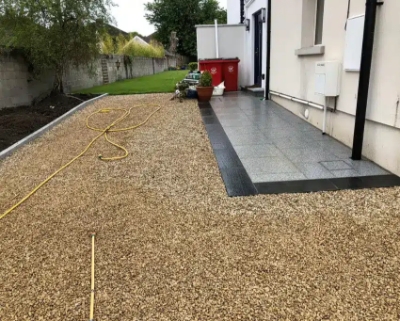
A mix of granite paving, black limestone edging, and gravel is a popular choice for driveways, especially where durability is a priority.
How the Materials Work Together
-
Granite paving creates a strong, hard-wearing surface that stands up well to regular use
-
Black limestone edging adds contrast and clearly defines the shape of the area
-
Gravel improves drainage and introduces a softer, more natural texture
This combination works well for everyday use while still offering a classic, structured look. The gravel also helps manage water more effectively, which can be particularly useful in wetter conditions.
Porcelain, Cobblelock, and Gravel: A Contemporary Option

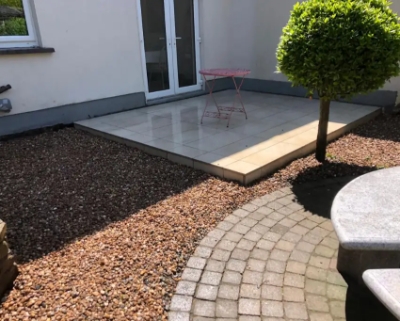
For patios, combining porcelain tiles with cobblelock paving and gravel can create a more modern and flexible space.
Key Characteristics of This Combination
-
Porcelain tiles give a clean, smooth finish that suits seating or dining areas
-
Cobblelock paving adds texture and a bit of visual warmth
-
Gravel borders soften the edges and help with water drainage
This mix is well suited to patios designed for both relaxing and socialising, offering a good balance between style and practicality.
Practical Benefits of Mixing Materials
Blending different paving types isn’t just about appearance—it also makes the space more functional:
-
Better drainage thanks to permeable elements like gravel
-
Clear zones for different uses, such as seating areas or pathways
-
More visual interest without relying on a single material
-
Flexible maintenance, as some sections may be easier to care for than others
With a bit of planning, each material can be used where it performs best, rather than applying one surface across the whole area.
Choosing the Right Combination for Your Space
The right mix of materials depends on how you plan to use your outdoor space. A few things to think about:
-
Purpose – will it be used for parking, entertaining, or everyday relaxation?
-
Weather – drainage and slip resistance are especially important in wetter climates
-
Style – consider how colours and textures work together
-
Maintenance – some materials need more upkeep than others
Getting this balance right helps create a space that not only looks good but also works well over time.
Conclusion
Combining paving materials is a simple way to make patios and driveways more interesting and practical. By mixing surfaces like stone, concrete, porcelain, and gravel, you can create an outdoor space that feels well-designed, durable, and easy to use day to day.